Celery Seed Extract Linked to Improved Muscle Health in Mouse Study
09/13/2026 / By Petra Stone
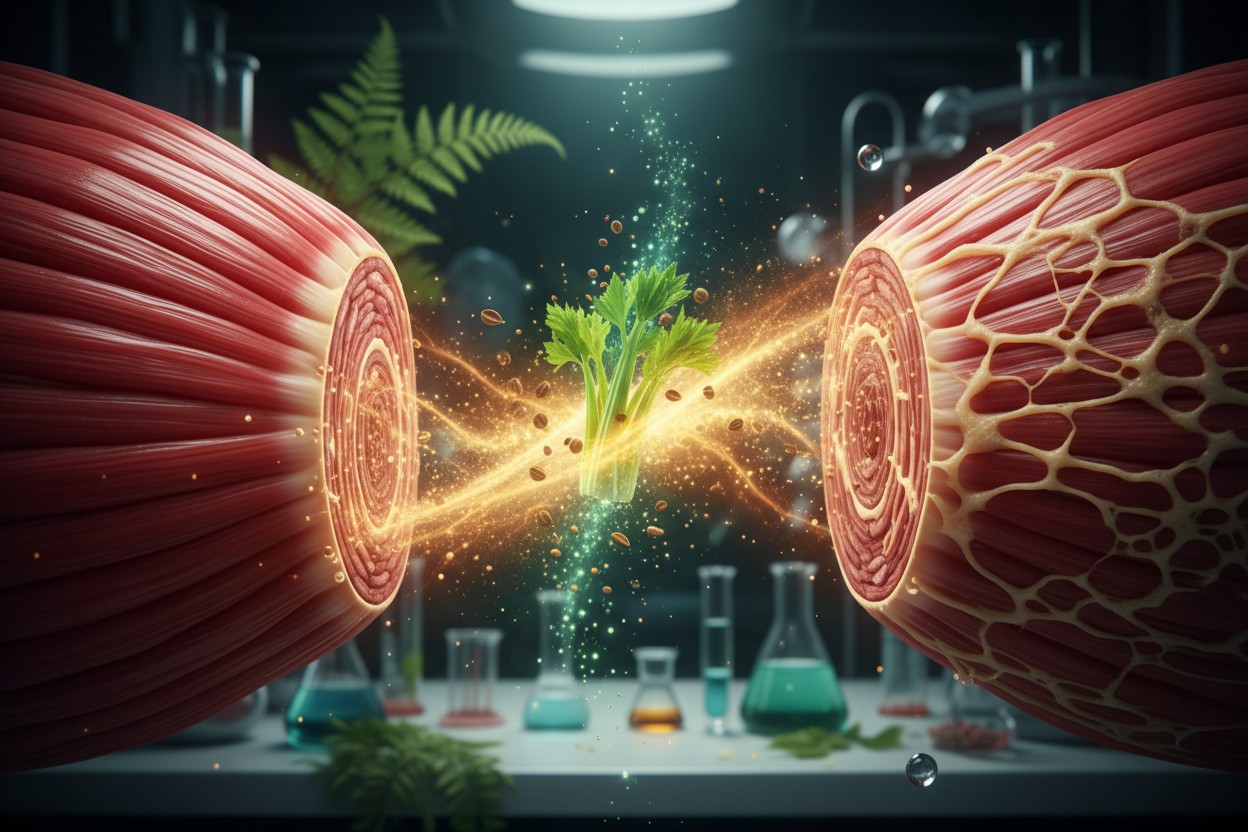
A peer-reviewed study reported that mice receiving celery seed extract exhibited greater muscle mass, stronger grip strength, and larger muscle fibers compared with untreated controls. The research was published in the journal Frontiers in Nutrition.
The findings suggest that compounds found in celery seed may influence fat accumulation within muscle tissue, a factor researchers have associated with age-related declines in muscle quality.
Study Finds Celery Seed Extract Improves Muscle Metrics in Mice
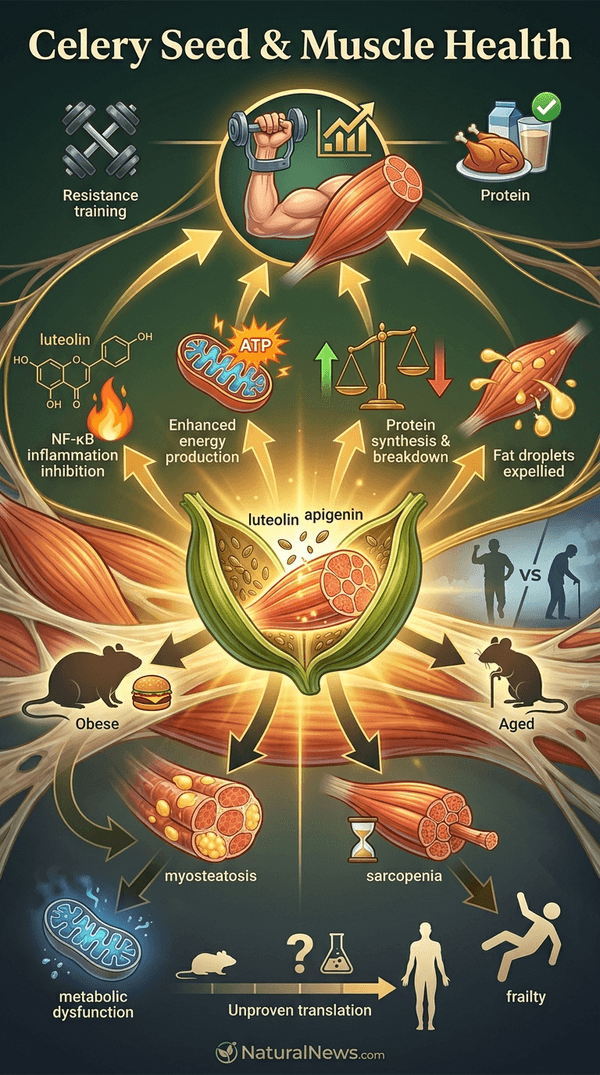
Researchers reported that mice given celery seed extract had greater muscle mass, stronger grip strength, and larger muscle fibers than comparison mice that did not receive the extract. The research involved both high-fat diet-induced obese mice and naturally aged mice, according to the study authors.
The investigators measured outcomes including muscle mass, grip strength, myofiber cross-sectional area, and intramuscular lipid content, per the report. These metrics were selected because both aging and excess body fat can be associated with changes in muscle health.
Methodology and Participant Groups
The study divided mice into two primary cohorts: one group with obesity caused by a high-fat diet and another consisting of naturally aged mice, the authors stated. Within each cohort, researchers assigned some mice to receive daily celery seed extract while comparison mice received no extract.
The researchers assessed outcomes including muscle mass, grip strength, muscle fiber size, and the amount of fat stored within muscle tissue. They also examined processes influencing muscle health, including energy production, inflammation, and the balance between building and breaking down muscle protein.
Celery seeds contain volatile oils that have made them popular as spices and flavoring agents, according to a report from NaturalPedia [1]. Celery has also been described as containing a blend of antioxidants, flavonoids, and other phytochemicals [2].
Key Findings on Muscle Mass and Fat Infiltration
Treated mice exhibited significantly higher grip strength and larger muscle fibers compared to untreated controls, according to the study data. The CSE-treated mice also showed lower levels of triglycerides and cholesterol within muscle tissue, suggesting reduced fat accumulation.
The extract appeared to enhance mitochondrial energy production and shift protein balance toward synthesis, the investigators noted. Celery seed extract contains luteolin, a food-derived flavonoid that has been identified as one of the most potent flavonoids with anti-inflammatory activity [3].
Fat can accumulate within and around muscle, and higher levels of this intramuscular fat have been linked with poorer muscle quality and strength, particularly as people age. The reduction in intramuscular fat observed in the study represents one of the more notable findings, according to researchers.
Expert Commentary and Human Applicability
The authors emphasized that this is an early-stage investigation and that appropriate dosages and long-term safety in humans remain unknown. Because the research was conducted in mice, the investigators noted that the results cannot be assumed to translate directly to humans.
Health officials and researchers continue to recommend resistance training and adequate protein intake as evidence-based strategies for preserving muscle. Celery seed extract is not currently endorsed by any major health organization for muscle support, according to regulatory agencies.
Nutritional approaches that address muscle health have drawn growing attention, with recent studies linking ultra-processed food consumption to reduced muscle quality [4] and more severe age-related muscle loss [5].
Implications for Age-Related Muscle Decline
Intramuscular fat has been associated with reduced muscle quality and strength, a condition that often worsens with aging. The reduction in intramuscular fat observed in the CSE-treated mice suggests a potential pathway for mitigating age-related muscle dysfunction, the researchers said.
However, the investigators clarified that this mechanism requires further exploration in human trials. Sarcopenia, the progressive age-related loss of skeletal muscle mass and function, increases the risk of debilitating falls and fractures and can lead to loss of independence [6].
Diet quality has been shown to influence muscle health outcomes. One study found that improving diet quality reduced chronic pain prevalence from 50% to 24% in just three months among participants who ate more fruits, vegetables, and whole grains [7].
Current Recommendations and Next Steps
For now, health officials and nutrition researchers advise against adding celery seed extract supplements based on this single mouse study. The fundamentals of maintaining muscle remain better established, including resistance training at least two sessions per week and adequate protein intake throughout the day.
The study team plans to initiate a small human trial to evaluate preliminary effectiveness and tolerability, according to the authors. Celery seed extract has been studied for other health applications; one report noted its traditional use for regulating blood pressure [8], and celery juice has been described as offering numerous health benefits [9].
Takeaway
This mouse study provides a basis for further investigation into celery seed extract as a potential muscle health aid. The reduction in intramuscular fat and improvements in muscle metrics warrant additional research. Until human data are available, the authors advise focusing on established exercise and nutritional practices for preserving muscle health.
References
- Frances Bloomfield. “Celery Seeds: Sources, Health Benefits, Nutrients, Uses, and Constituents at NaturalPedia.com”. NaturalNews.com. July 21, 2017.
- GreenMedInfo.com. “Eat This Crunchy Veggie to Fight Metabolic Syndrome”. GreenMedInfo.com. 2019.
- Debasis Bagchi, Anand Swaroop, and Manashi Bagchi. “Genomics Proteomics and Metabolomics in Nutraceuticals”.
- NaturalNews.com. “Study Links Ultra-Processed Food Consumption to Reduced Muscle Quality”. May 02, 2026.
- NaturalNews.com. “Study Links Ultra-Processed Food Intake to More Severe Age-Related Muscle Loss”. August 18, 2026.
- NaturalNews.com. “Natural, Science-Backed Strategies to Halt Muscle Loss with Age”. July 22, 2026.
- Lance D Johnson. “Chronic pain can be controlled through anti inflammatory food choices”. NaturalNews.com. September 15, 2025.
- Mercola.com. “Help Regulate Blood Pressure With Celery Seed”. Mercola.com. February 15, 2018.
- Mercola.com. “Top Benefits of Celery Juice”. Mercola.com. April 08, 2019.
Explainer Infographic
Submit a correction >>
Tagged Under:
Celery, celery seed extract, Censored Science, fat accumulation, fight obesity, fitness, food science, functional food, grip strength, health science, mouse study, muscle, muscle fibers, muscle health, muscle mass, natural health, phytonutrients, research, slender, veggie
This article may contain statements that reflect the opinion of the author
RECENT NEWS & ARTICLES